Anthropology & Technology Lab (ATL)
Research group at the University of Michigan School of Information
Director and Principal Investigator, Michaelanne Thomas, PhD
Our research centers around the ways people interact with information technologies (ICTs), including social media, smartphones, computers, etc. as they grapple with infrastructural gaps.
How might we imagine and bring about more just and liberatory futures? The Anthropology & Technology Lab (ATL) seeks to actively contribute to dismantling oppressive structures of power by working alongside individuals and communities. We work together with people in communities that have often been overlooked by traditional research, policy, or design.
Drawing on anthropological methods and traditions, we are a group of faculty and graduate students at the University of Michigan’s School of Information conducting research at the intersection of people, culture, and technology.
Our Team
Director

Michaelanne Thomas, PhD is an Assistant Professor at the University of Michigan’s School of Information. Her work draws on the fields of Anthropology, CSCW (Computer Supported Cooperative Work), and ICTD (Information Communication Technologies & Development) to study how people collaboratively design, access, and participate with internet technologies in constrained contexts.
mmtd@umich.edu
PhD Students
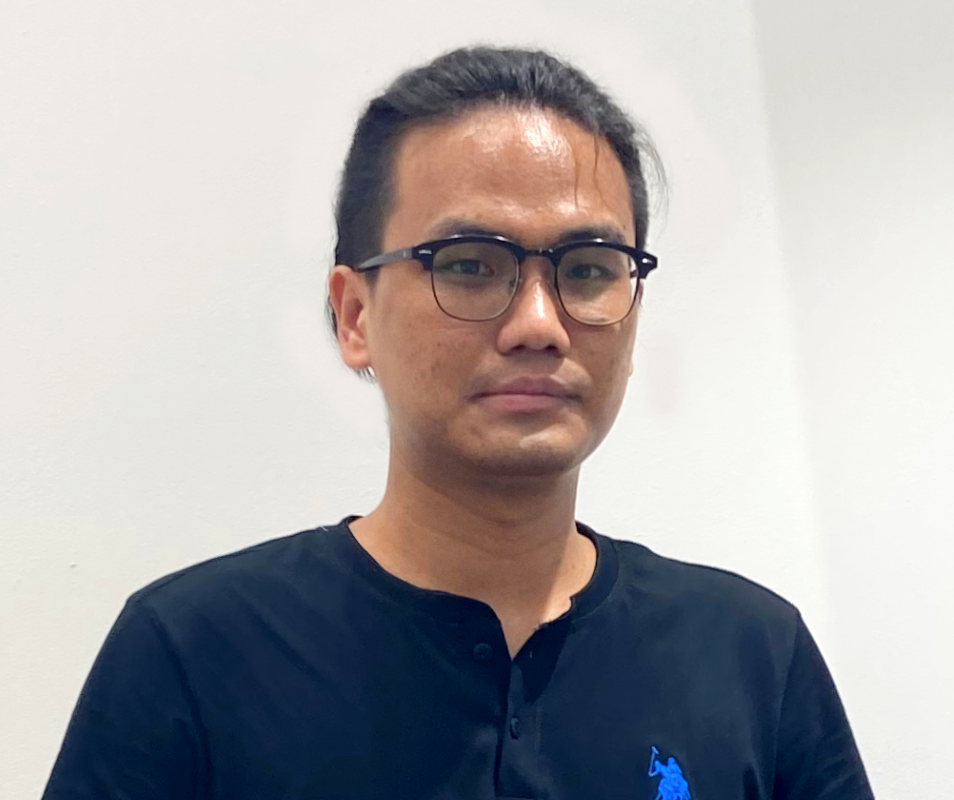
S. Tonsing is a doctoral student at the School of Information, University of Michigan. He completed his M.Phil. in Sociology at the Delhi School of Economics, University of Delhi, India. Pieces of his M.Phil. dissertation appear in Discourse & Communication journal and as a forthcoming book chapter under Routledge publication. He completed his Master’s in Sociology at the North Eastern Hill University, India. His article “Baudrillard’s simulacra and death of solidarity” in RePLITO contributes to reshaping the marginalised understanding of solidarity in the age of social media. He also worked as an assistant professor at Rayburn College, Manipur University, and Sakus Mission College, Nagaland University, both in the department of sociology.

Hibby Thach (she/her) is a third-year PhD student at the University of Michigan’s School of Information, studying multi-marginalized people’s experiences with content moderation, live-streaming, and trans technologies. She primarily uses interview and digital ethnographic methods. Her work engages with HCI, Communication and Media Studies, and Content Creator studies.
As part of her work on live-streaming, she runs a Twitch channel and streams variety content. Currently, she is interested in identity exploration and identity management in indie VTubing. She is also a graduate student coordinator for the Trans Studies Research Workshop at the University of Michigan.
Recent publications
Hibby Thach, Samuel Mayworm, Michaelanne Thomas, and Oliver L. Haimson. 2024. Trans-centered moderation: Trans technology creators and centering transness in platform and community governance. In Proceedings of the 2024 ACM Conference on Fairness, Accountability, and Transparency (FAccT ’24). Association for Computing Machinery, New York, NY, USA, 326–336.
Hibby Thach, Samuel Mayworm, Daniel Delmonaco, and Oliver L. Haimson. 2022. (In)visible moderation: A digital ethnography of marginalized users and content moderation on Twitch and Reddit. New Media & Society 26, 7 (2022), 4034–4055.

Samuel Reiji Mayworm is a second-year PhD student at the University of Michigan School of Information. He is interested in trans-centered online communities, content moderation, social computing, HCI, algorithmic folk theories, online community support and care practices, and “community-built” online infrastructures. Prior to graduate school, he worked as a rural public librarian.
Recent Publications
AI Attitudes Among Marginalized Populations in the U.S.: Nonbinary, Transgender, and Disabled Individuals Report More Negative AI Attitudes. Authors: Oliver L. Haimson, Samuel Mayworm, Alexis Shore Ingber, and Nazanin Andalibi. ACM FAccT 2025.
“That Moment of Curiosity”: Augmented Reality Face Filters for Transgender Identity Exploration, Gender Affirmation, and Radical Possibility. Authors: Kat Brewster, Aloe DeGuia, Samuel Mayworm, F.R. Khan, Mel Monier, Denny L. Starks, and Oliver L. Haimson. CHI 2025.
Cataloging Augmented, Ambivalent Transgender Futures: Designing Inclusive AR Technologies for Trans Communities Through Speculative, Participatory Zine-Making. Authors: F.R. Khan, Kat Brewster, Aloe DeGuia, Denny L. Starks, Malaya Mañacop, Samuel Mayworm, Tawanna R. Dillahunt, and Oliver L. Haimson. CHI 2025.
Misgendered During Moderation: How Trans Bodies Make Visible Cisnormative Content Moderation Policies and Enforcement on Social Media Platforms. Authors: Samuel Mayworm, Kendra Albert, and Oliver L. Haimson. ACM FAccT 2024.
Trans-Centered Moderation: Trans Technology Creators and Centering Transness in Platform and Community Governance. Authors: Hibby Thach, Samuel Mayworm, Michaelanne Thomas, and Oliver L. Haimson. ACM FAccT 2024.
Advisors to the Lab
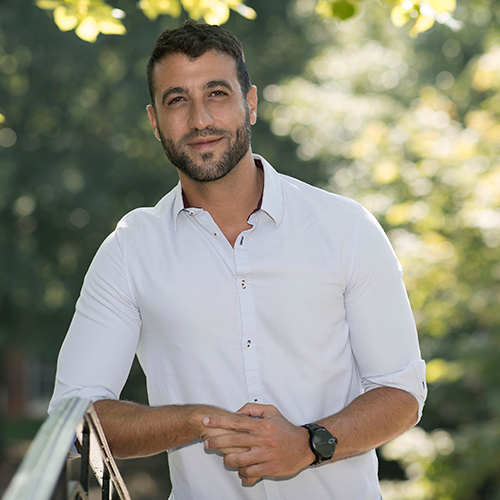
David Nemer is an Assistant Professor of Media Studies at the University of Virginia. His research and teaching interests cover the intersection of Anthropology of Technology, Science and Technology Studies (STS), Information Anthropology, ICT for Development (ICT4D), and Human-Computer Interaction (HCI). He is an ethnographer with fieldwork experience in Havana, Cuba, Guadalajara, Mexico, the favelas of Vitória, Brazil, and in the Appalachian region of eastern Kentucky. David Nemer is the author of Technology of the Oppressed: Inequity and the Digital Mundane in Favelas of Brazil (2022, MIT Press) and Favela Digital: The other side of technology (2013, GSA).
Alumni
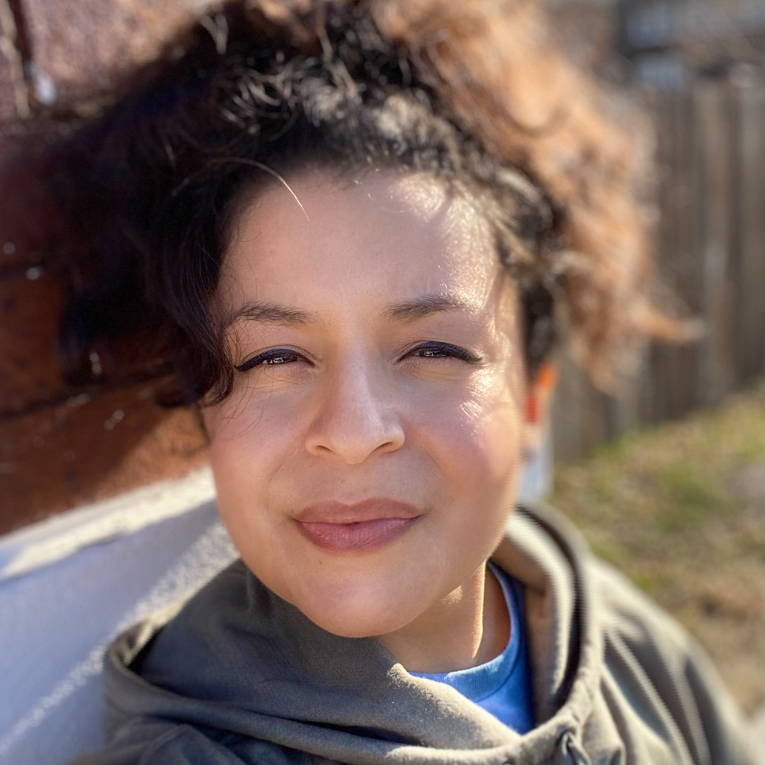
Sylvia Darling, PhD is a Postdoc at the University of Michigan School of Information. She researches migration, gender, and digital tech with the intent to devise sociotechnical strategies that support migrants’ survival and human dignity as they cross borders. An ethnographer by training, she uses participant observation and in-depth interviews to convey the experiences of communities in Latin America and the United States impacted by transnational injustice.

Alexis Herrera is a first-year PhD student in the Program in Literature at Duke University. His research draws from film and media theory, critical race studies, science studies, and psychoanalysis to examine the history and politics of 20th and 21st century U.S. Latina/o/x racialization. He holds an MS from the University of Michigan in information and science and technology studies (2023) and a BA from the University of Pennsylvania in sociology (2019).
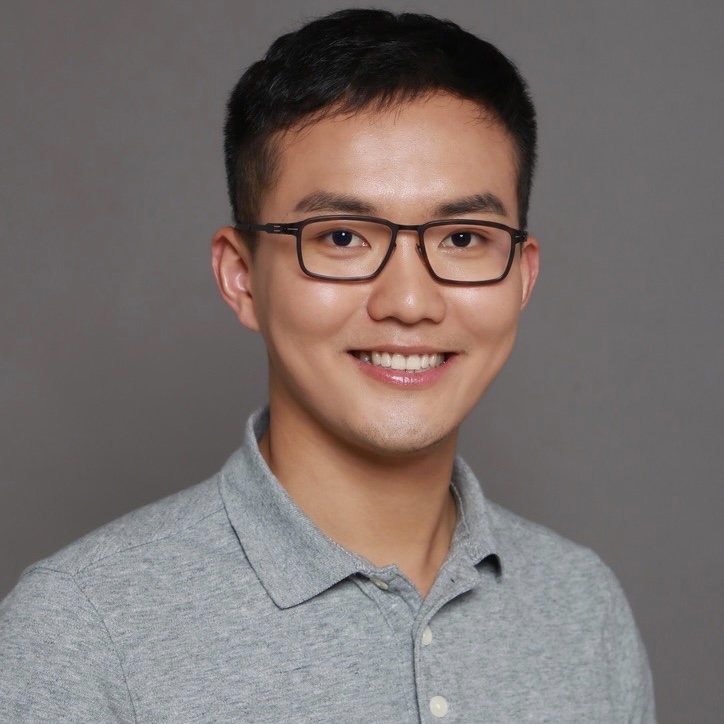
Ben Zefeng Zhang, PhD is an Assistant Professor in the Department of Technology and Society, College of Engineering and Applied Sciences, Stony Brook University. He studies the sociotechnical impacts of AI-enabled systems in critical areas (e.g., work, migration, and education) to advance theory and inform more equitable and human-centered design and policy interventions. To achieve these insights, he employs a life-cycle-centered approach, leveraging ethnographic and qualitative research methods to examine the promise, inequality, and invisible labor inherent in AI infrastructures — from development and implementation to governance.
Recent Publications
Identity Alignment and the Sociotechnical Reconfigurations of Emotional Labor in Transnational Gig-education Platforms. Authors: Ben Zefeng Zhang, Dipto Das, and Bryan Semaan. The Computer Supported Cooperative Work (CSCW) Journal (January 2025). Download PDF.
The Making of Performative Accuracy in AI Training: Precision Labor and Its Consequences. Authors: Ben Zefeng Zhang, Tianling Yang, Milagros Miceli, Oliver Haimson, and Michaelanne Thomas. The ACM Conference on Human Factors in Computing Systems (CHI’25). Download PDF.
“Dialing it Back:” Shadowbanning, Invisible Digital Labor, and How Marginalized Content Creators Attempt to Mitigate the Impacts of Opaque Platform Governance. Authors: Senami Kojah, Ben Zefeng Zhang, Carolina Are, Dan Delmonaco, and Oliver L. Haimson. The ACM International Conference on Supporting Group Work (GROUP’25). Download PDF.
 Michaelanne Thomas, PhD